What if the soap you’ve been buying as Savon de Marseille was actually fake?
Surprising, isn’t it? Yet the name “Savon de Marseille” is not a protected geographical designation of origin. Unlike Champagne or Roquefort cheese, it doesn’t automatically guarantee where or how a product was made.
That means a colorful, heavily perfumed soap manufactured far from Marseille can carry the same famous name as a traditionally crafted French soap.
But does it offer the same ingredients, quality, and benefits? Not necessarily.
Fortunately, once you know how to spot fake Marseille soap, the differences become much easier to recognize.
Here’s what to look for, which mistakes to avoid, and why choosing the genuine product matters for your skin, your home, and the environment.
Authentic Marseille soap is defined by three essential elements: its composition, traditional manufacturing method, and geographical origin.
One of the easiest ways to recognize genuine Marseille soap is to check the ingredient list.
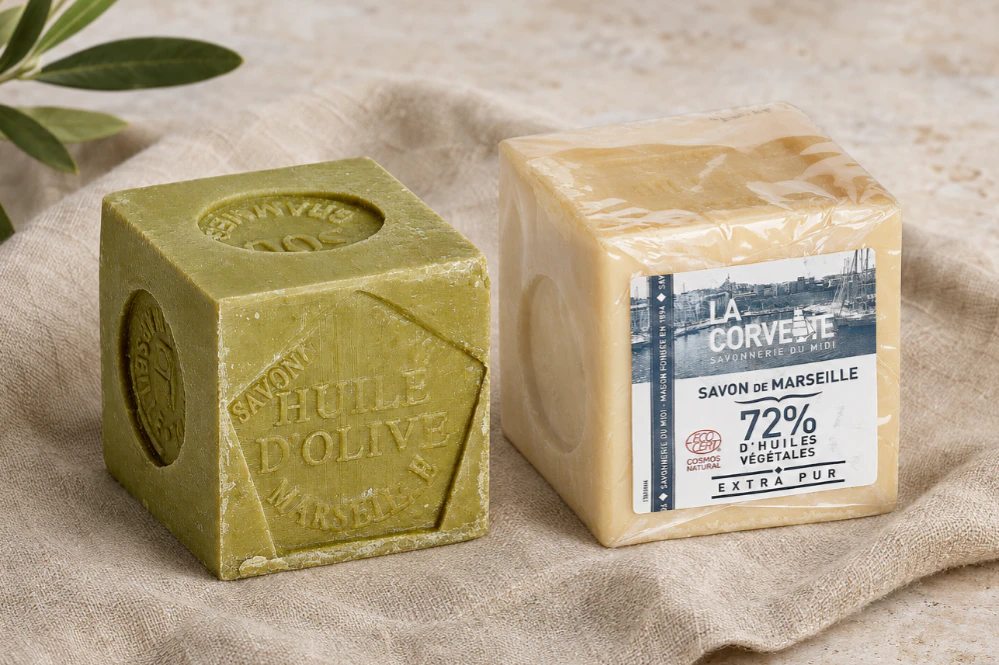
Traditional Marseille soap is made using four basic raw materials: vegetable oils, water, soda, and salt. The finished product generally lists around five or six INCI ingredients, including glycerin naturally produced during saponification.
Look for a simple formula based on vegetable oils, with the famous “72% d’huiles végétales” marking.
For example, La Corvette’s authentic Olive Marseille Soap contains Sodium Olivate, Sodium Cocoate, Aqua, Glycerin, Sodium Chloride, and Sodium Hydroxide.
Easy Rule: Authentic traditional Marseille soap contains no added perfume, colorants, preservatives, or animal fats.
And remember: the 72% marking refers to vegetable oils, not necessarily olive oil alone.
Your senses can reveal quite a lot about a soap.
A heavily scented bar may be a perfectly pleasant soap, but it doesn’t follow the traditional Marseille soap formula.
This is where authentic Marseille soap truly stands apart.
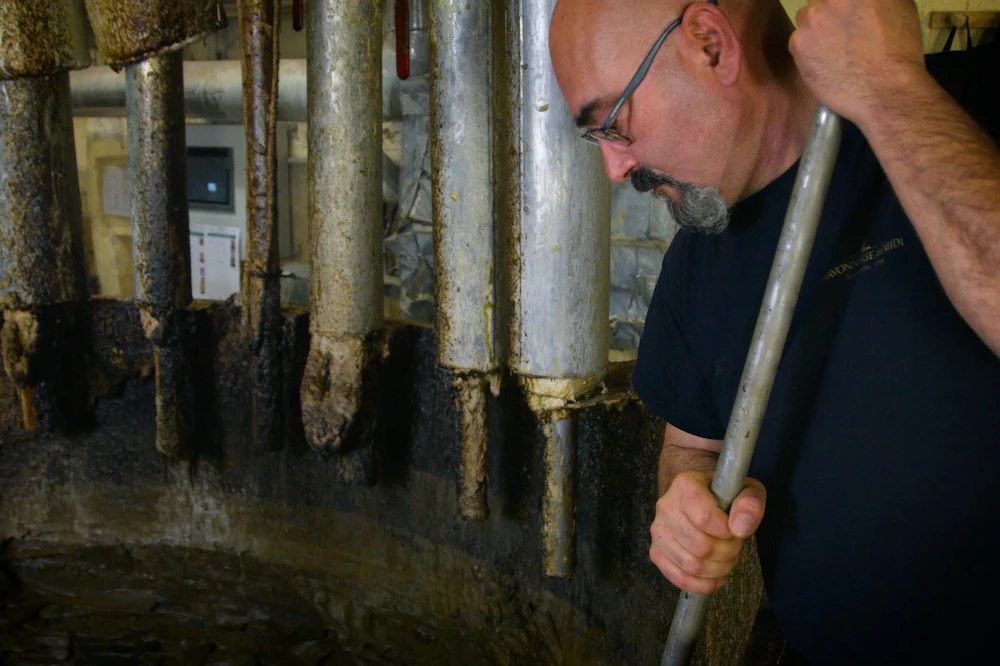
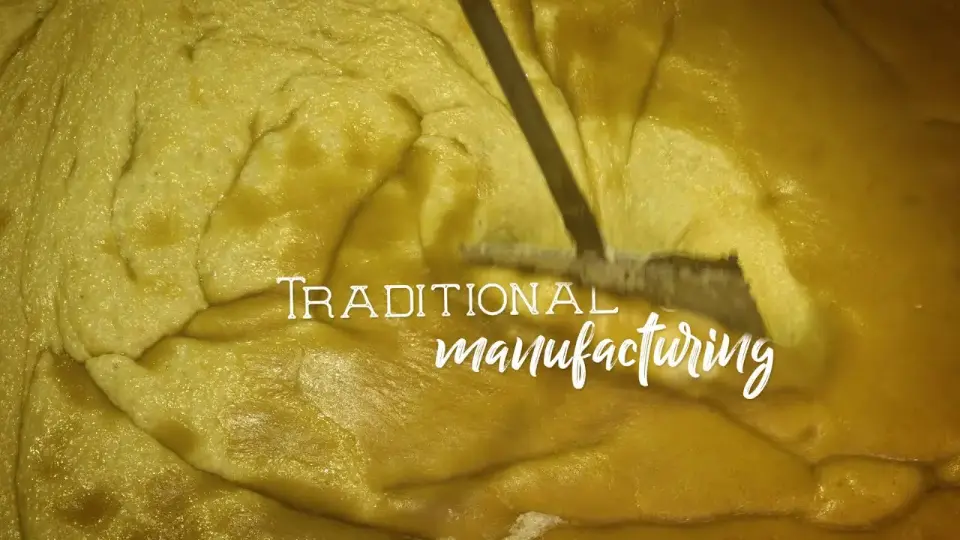
The traditional “Procédé Marseillais” involves carefully cooking and refining vegetable oils in large cauldrons through a process lasting approximately 7 to 10 days.
It requires patience, experience, and the supervision of a master soapmaker.
Authentic traditional Marseille soap must also be manufactured in Marseille or the Bouches-du-Rhône region of France.
La Corvette’s soaps are produced at the historic Savonnerie du Midi, founded in Marseille in 1894, where this centuries-old craftsmanship is still preserved.
How can you know whether a soap genuinely respects these traditions?
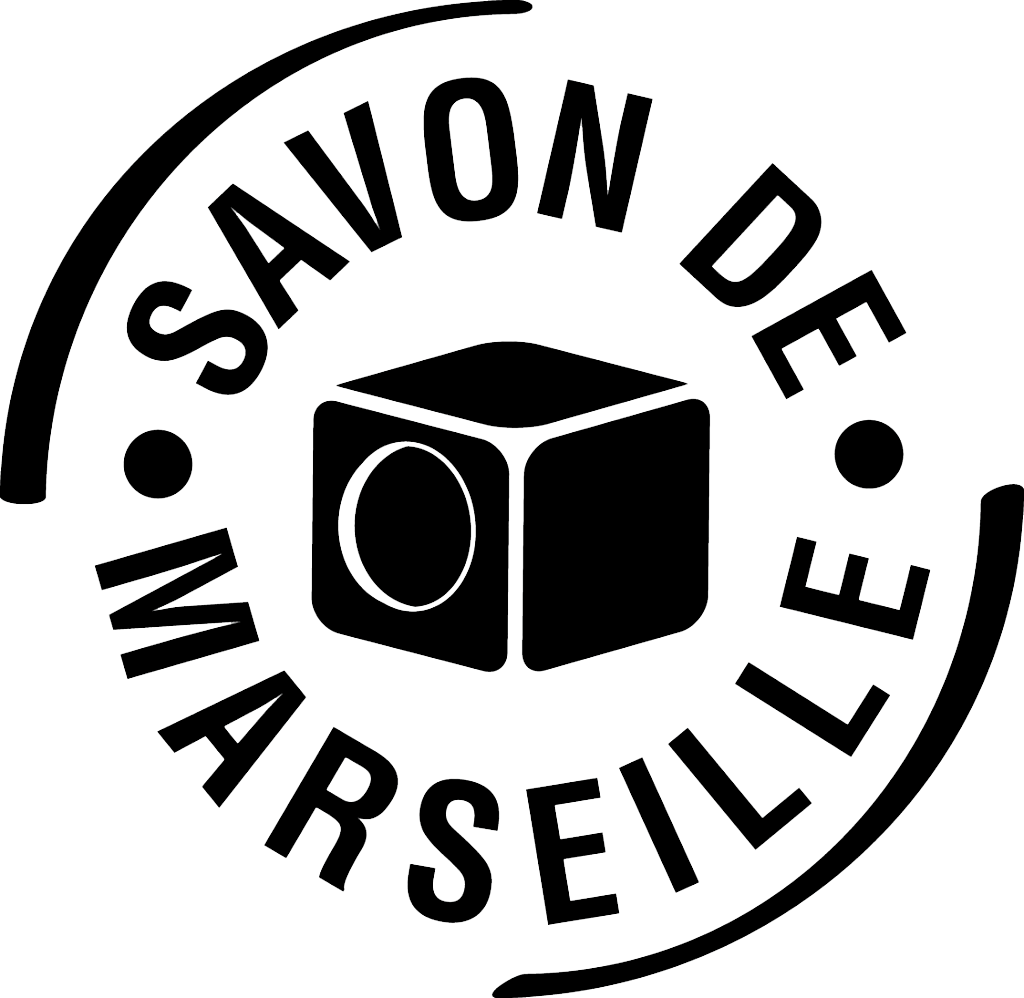
Look for the UPSM logo.
The Union des Professionnels du Savon de Marseille was established by historic regional soapmakers to protect authentic Marseille soapmaking.
Its registered collective mark confirms compliance with three essential criteria:
Compliance with these standards is independently monitored by CERTIPAQ.
La Corvette’s Savonnerie du Midi is a founding member of the UPSM.
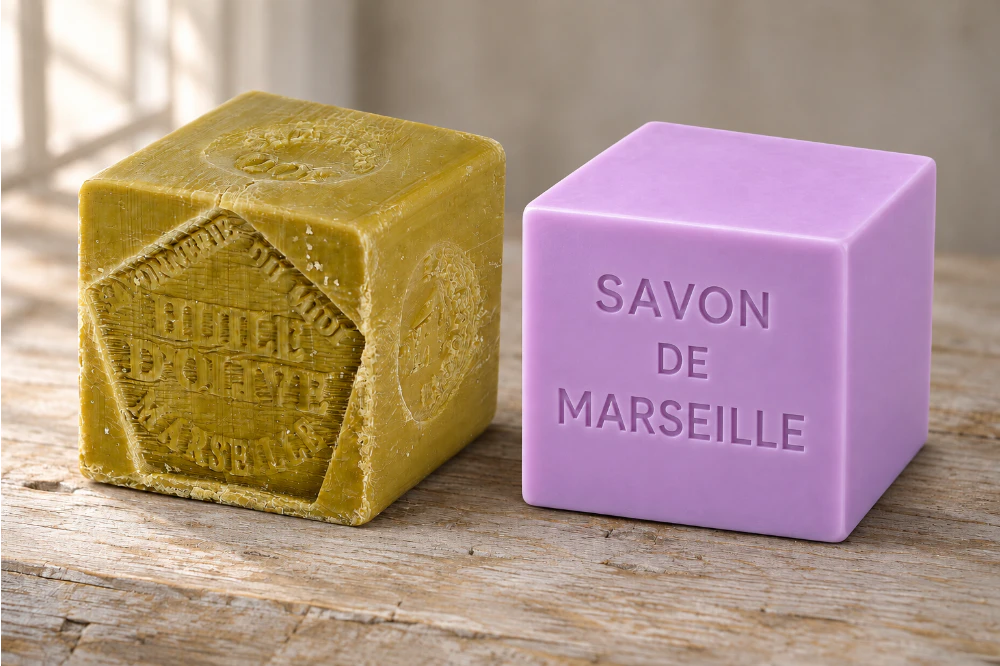
Look for the UPSM mark on the packaging or product information. Authentic cubes may also carry traditional engravings identifying the manufacturer, geographical origin, and 72% vegetable oil content.
La Corvette’s authentic Marseille soaps are additionally COSMOS NATURAL certified by ECOCERT Greenlife, offering further reassurance about their natural composition.
Some imitations look remarkably convincing. Here are four common mistakes worth avoiding.
The name alone doesn’t guarantee authenticity.
A product may be labeled Savon de Marseille without following the traditional manufacturing process or being made in Marseille.
Always check the manufacturer, ingredients, origin, and quality marks, rather than trusting the front label.
Everyone enjoys a bargain, but traditional craftsmanship has a value.
Authentic Marseille soap requires quality vegetable oils, skilled workers, and a manufacturing process lasting several days.
Extremely cheap products may use less expensive ingredients, alternative manufacturing methods, animal fats, or synthetic additives.
If a soap costs only a fraction of what traditional soapmakers charge, it’s worth taking a closer look.
The cheapest bar isn’t always the best value.
A genuine Marseille soap formula is beautifully simple.
Watch for ingredients that don’t belong in the traditional recipe:
These ingredients don’t automatically make every soap poor quality, but they indicate that you’re looking at a different formulation.
If you’re choosing Marseille soap for its minimalist, fragrance-free composition, that distinction matters.
Those colorful little soaps sold in Provençal souvenir shops can be tempting. Lavender, rose, almond, lemon… they certainly look and smell lovely.
However, these scented savonnettes are different from authentic traditional Marseille soap.
La Corvette itself offers beautifully scented Provence soaps alongside its authentic Marseille collection.
Both have their place, but a fragranced soap should not be confused with the traditional, fragrance-free Marseille formula.
The difference goes beyond appearance. Choosing an imitation without knowing what’s inside can affect your skin, your spending, and your environmental choices.
1. Potential skin irritation
Authentic Marseille soap is appreciated for its simple, hypoallergenic, fragrance-free formula, making it a popular choice for sensitive skin and everyday family hygiene.
Some imitation products contain added perfumes, colorants, or other ingredients that can cause irritation, dryness, or unwanted skin reactions, particularly in sensitive individuals.
2. Environmental concerns
Traditional Marseille soap is vegetable-based and naturally biodegradable. According to La Corvette, its authentic soap is 100% biodegradable in less than 28 days.
Alternative formulations may contain additional synthetic ingredients, including persistent polymers or microplastic ingredients in certain products, which can contribute to environmental pollution.
Choosing a transparent, traditional formula helps you avoid unnecessary additives.
3. Poorer value for money
Authentic Marseille soap is firm and long-lasting. A 300g cube can serve you for months, depending on how frequently you use it and how it’s stored.
Some cheaper, softer bars dissolve quickly, meaning you’ll need to replace them more often.
4. Losing the value of authenticity
When you choose genuine Marseille soap, you’re paying for more than a familiar name.
You’re choosing a documented origin, traditional craftsmanship, recognizable ingredients, and a product with numerous uses for personal hygiene and household care.
And you’re helping preserve a French soapmaking tradition passed down through generations.
Knowing what to look for is the first step. The next is choosing a reliable place to buy it.
Established soapmakers and trusted distributors are among the most reliable places to find authentic Marseille soap.
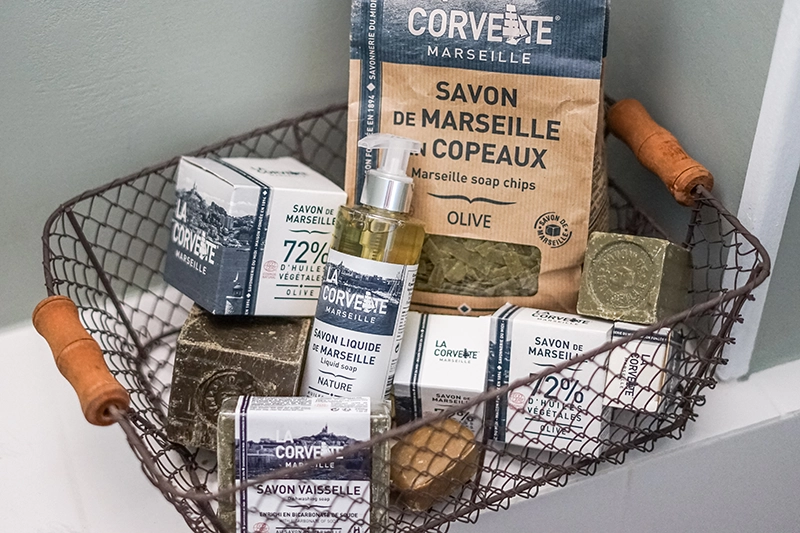
At la-corvette.shop, you’ll find traditional Marseille soap cubes and bars, along with soap flakes for laundry care.
La Corvette’s authentic soaps are made in Marseille using the traditional cauldron process, comply with UPSM standards, and carry COSMOS NATURAL certification by ECOCERT Greenlife.
Some La Corvette household cleaning products also carry ECOCERT Ecodetergent certification, reflecting environmental standards relevant to that product category.
Organic stores and specialized natural-product retailers can also be good places to find authentic Marseille soap.
Look for clear manufacturer information, a simple ingredient list, and recognized quality marks. Don’t rely on color or packaging alone.
Provençal markets are charming, filled with fragrant soaps and colorful souvenirs. But not every soap sold there is necessarily made in Marseille.
Before buying, check the manufacturer’s name, ingredient list, 72% vegetable oil marking, and geographical origin.
A genuine Marseille soap cube may look less decorative than its colorful neighbors, but its value lies in the craftsmanship behind it.
Before buying your next bar of Savon de Marseille, remember these five checks:
The name alone doesn’t guarantee authenticity. The ingredients, craftsmanship, and origin tell the real story.
Once you know what makes genuine Marseille soap special, it’s much harder to be fooled by an imitation.
Why settle for a product that simply carries the name when you can enjoy the authentic tradition behind it?
Discover the authentic Marseille soap collection at La Corvette and experience the quality of traditional French soapmaking for yourself.