
We tend to think about sustainability through the choices that are easiest to see: the food we buy, the packaging we recycle or the cosmetics we put on our skin. Yet some of the products we use most often are hidden under the kitchen sink, beside the washing machine or on the bathroom shelf.
Soap, laundry detergent and household cleaners become part of our everyday environment. Their ingredients are rinsed down our drains, their packaging eventually becomes waste, and their formulas come into contact with our clothes, homes and skin.
So what actually makes an eco-friendly soap a better choice?
It goes beyond green packaging or the word “natural” on a label. Ingredients, biodegradability, manufacturing, packaging and versatility all matter. And interestingly, some of the products that fit these principles best existed long before “eco-friendly” became part of our vocabulary.
Many conventional cleaning products combine surfactants, fragrances, colourants and other functional ingredients to create the cleaning experience we have become accustomed to. Once washed away, some of these ingredients eventually enter wastewater systems, making biodegradability an important part of the environmental conversation.
Packaging matters too. Solid soaps generally require less packaging than liquid alternatives, while concentrated and multipurpose products can reduce the number of separate bottles we bring into our homes.
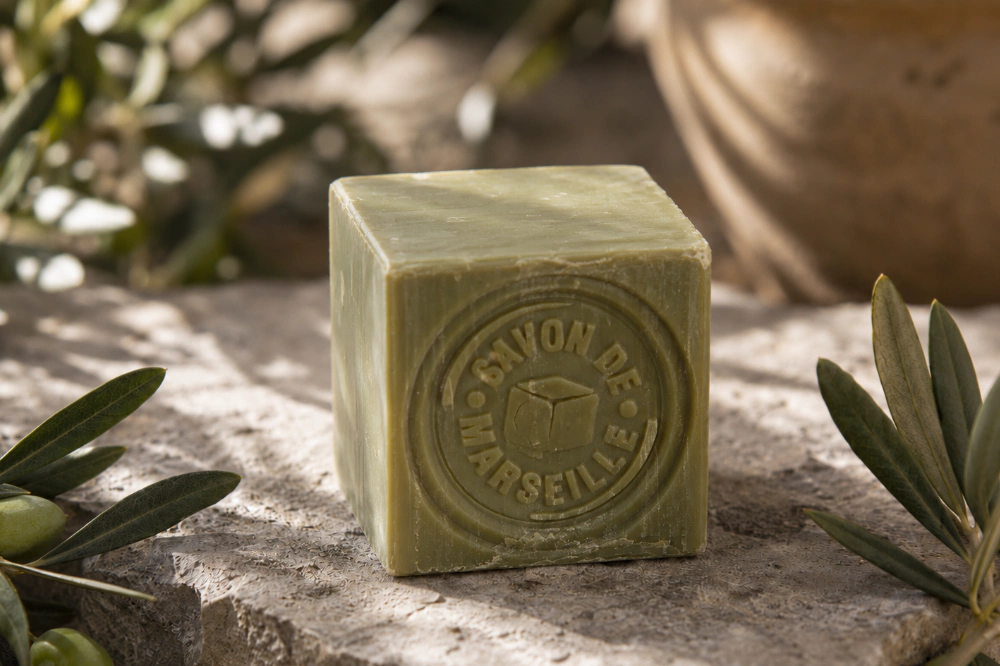
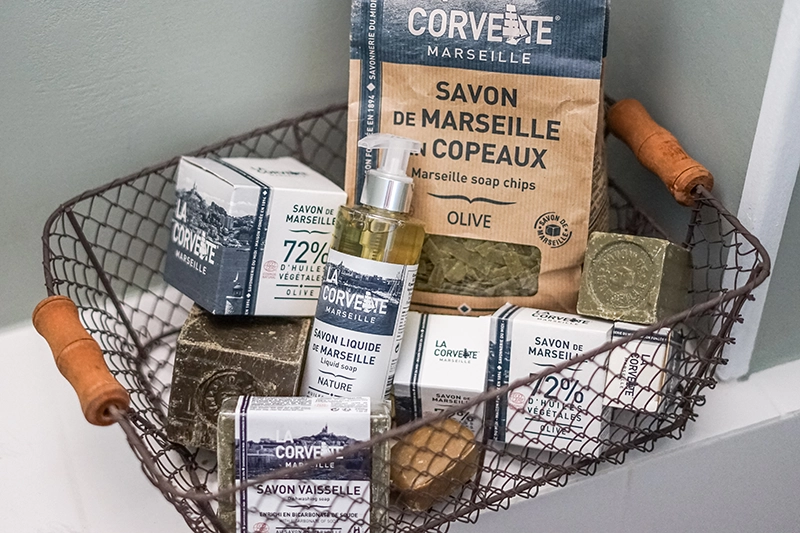
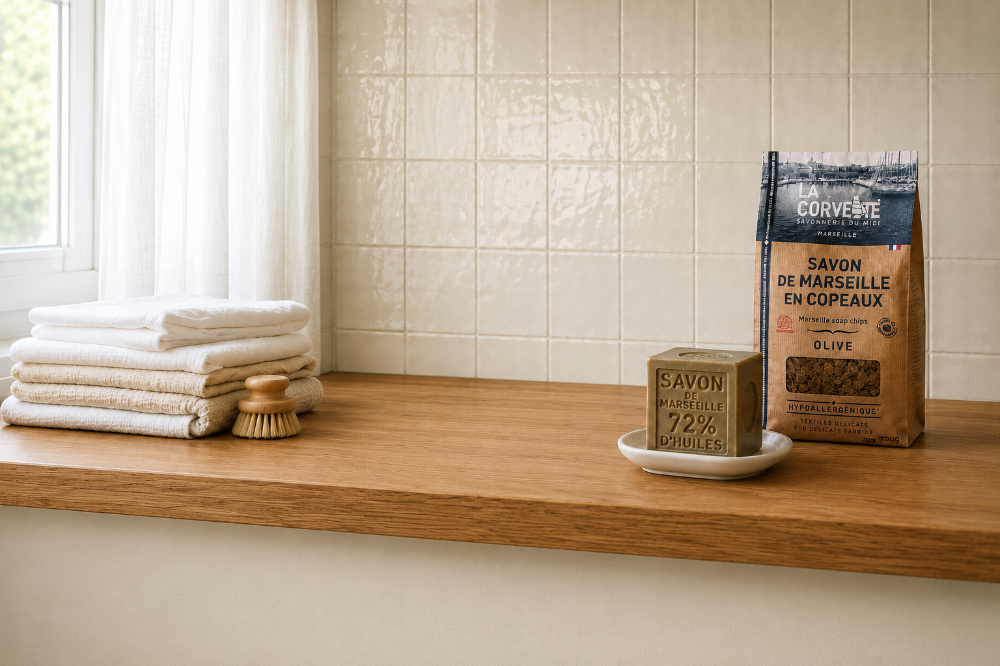
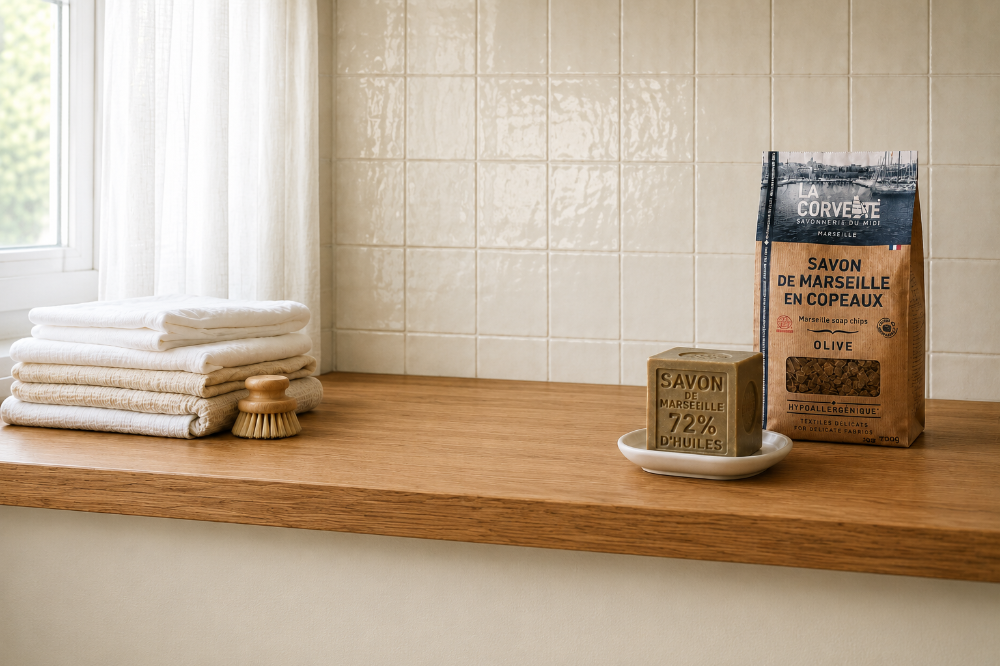
Traditional Marseille soap is a good example. La Corvette Marseille soap is made in Marseille using the traditional cauldron-cooking process and exclusively vegetable oils, without added perfume, colourants or preservatives. The olive-oil version is also palm-oil-free and certified COSMOS NATURAL by ECOCERT Greenlife.
A simple formula, a solid format and a product designed to last: sometimes sustainability can be surprisingly uncomplicated.
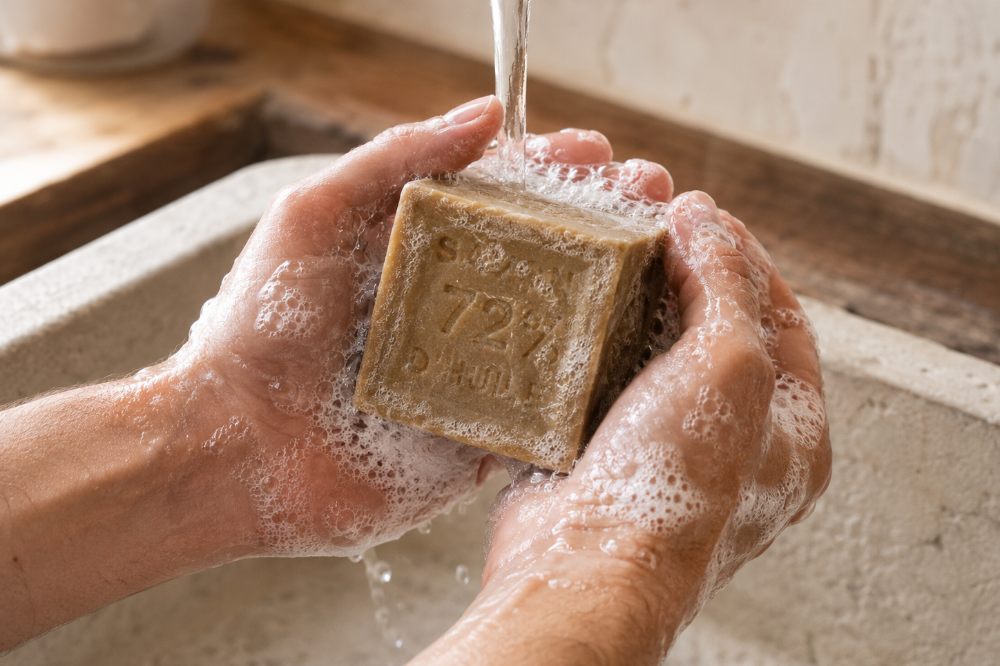
The bathroom can quickly fill with separate products for hands, body and different cleansing needs, often packaged individually in plastic.
Solid soap offers a simpler alternative. Authentic Marseille soap has traditionally been used for both hands and body, and La Corvette’s olive-oil Marseille soap is made from 100% naturally derived ingredients and exclusively vegetable oils, without added fragrance, colourants or preservatives.
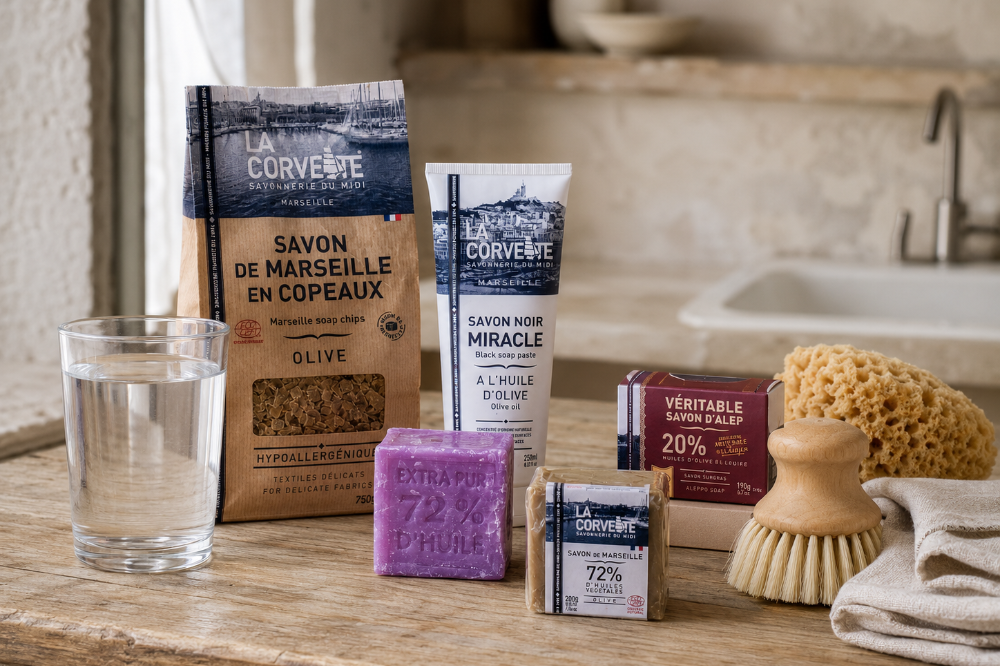
Other traditional options include Aleppo soap, made with olive and laurel oils, alongside La Corvette cosmetic ranges carrying independent COSMOS certifications.
Certifications such as COSMOS and ECOCERT are useful because they give environmental claims defined standards around ingredients, formulation and production. Instead of relying only on words such as “natural” or “eco”, the reader has an independent reference for understanding what sits behind them.
The same principle becomes particularly useful in household cleaning.
A traditional Marseille soap cube can be used to pre-treat laundry stains, hand-wash fabrics and handle different cleaning tasks around the home. Its solid, concentrated format also means one simple product can take the place of several more specialised ones.
Black soap is another traditional multipurpose alternative. La Corvette’s Ecological Black Soap with Olive Oil is a plant-based household cleaner made with olive-oil soap. Used at different dilutions, it can clean and degrease a variety of washable surfaces around the home.
This highlights an often overlooked side of eco-friendly cleaning. Choosing better products does not always mean finding an ecological replacement for every bottle already in the cupboard. Sometimes it means realising that we may not need so many separate products in the first place.
Marseille soap and black soap were multipurpose long before the word became a sustainability claim. Their usefulness comes from simple formulas, concentrated formats and the ability to perform more than one everyday task.
There is no single word on a label that guarantees a product is genuinely eco-friendly. A better approach is to look at the whole product: its ingredients, biodegradability, packaging, concentration, versatility and any independent certifications supporting its claims.
La Corvette combines these modern considerations with a much older manufacturing tradition. Savonnerie du Midi has produced soap in Marseille since 1894, and its authentic Marseille soaps follow the manufacturing charter of the Union des Professionnels du Savon de Marseille (UPSM), which establishes criteria for composition, traditional cauldron production and geographical origin.
Across the wider La Corvette range, selected products also carry certifications such as COSMOS and ECOCERT Ecodetergent, providing additional standards for cosmetic and household formulations.
Tradition and modern environmental standards may sound like two very different approaches. In practice, they often lead back to the same principles: thoughtful ingredients, simpler formulas and products designed to be genuinely useful.
Creating a more eco-friendly home does not require replacing everything under the sink at once. A better place to start may simply be the next product that runs out.
Could one concentrated cleaner replace several bottles? Could a solid soap replace another liquid product in plastic packaging? Could a traditional Marseille soap do more than one job?
Small choices like these gradually change the way we consume.
Perhaps that is one reason Marseille soap still feels relevant centuries after it first appeared. Long before sustainability became something we consciously pursued, everyday products were expected to be simple, useful, economical and made to last.
In some corners of our homes, moving forward may look surprisingly similar to going back to that idea.